




Scalp Micropigmentation Pigment Density: The Key to Natural Results

Scalp micropigmentation pigment density is the most critical factor that determines both natural appearance and longevity. It must be adjusted based on scalp type, desired outcome, and individual skin conditions rather than using a one-size-fits-all approach.
Most people considering SMP (scalp micropigmentation) ask the same questions:
- Why do some results look natural while others don’t?
- Why does the longevity vary from person to person?
- Why does the pigment sometimes fade unevenly?
The answer lies primarily in how pigment density is designed.
Understanding the Basics of Scalp Micropigmentation
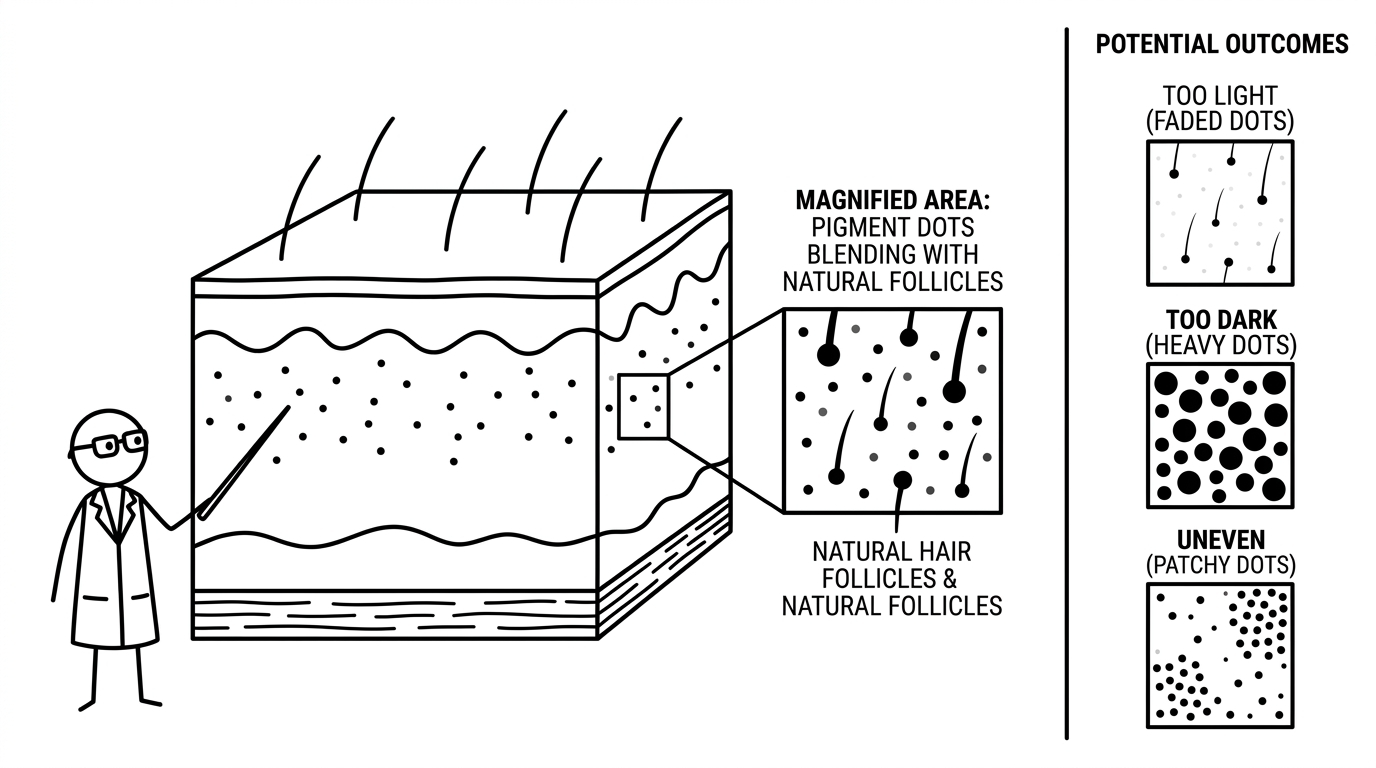
Scalp micropigmentation is a procedure that deposits pigment into the scalp to replicate the appearance of hair follicles. The goal is not simply to make the pigment visible, but to ensure it blends seamlessly with the natural scalp.
When pigment density is not properly adjusted, common issues include:
- Too light → fades quickly with minimal visual impact
- Too dark → appears artificial or overly saturated
- Uneven density → creates patchy or blotchy results
Pigment density is not just a technical detail—it is a design decision that defines the final outcome.
Why Pigment Density Matters (Real Outcome Differences)

Two of the most common complaints after SMP are:
1) “It looks too dark and unnatural”
This usually results from overly high pigment density during initial sessions.
2) “It faded too quickly”
This happens when pigment density is too low for the individual’s scalp condition.
Both issues stem from the same root problem:
👉 Lack of personalized pigment density adjustment.
Conclusion: There is no universal “correct density.” It must be customized.
3 Key Factors That Determine Pigment Density
1. Scalp Type (Most Important Factor)
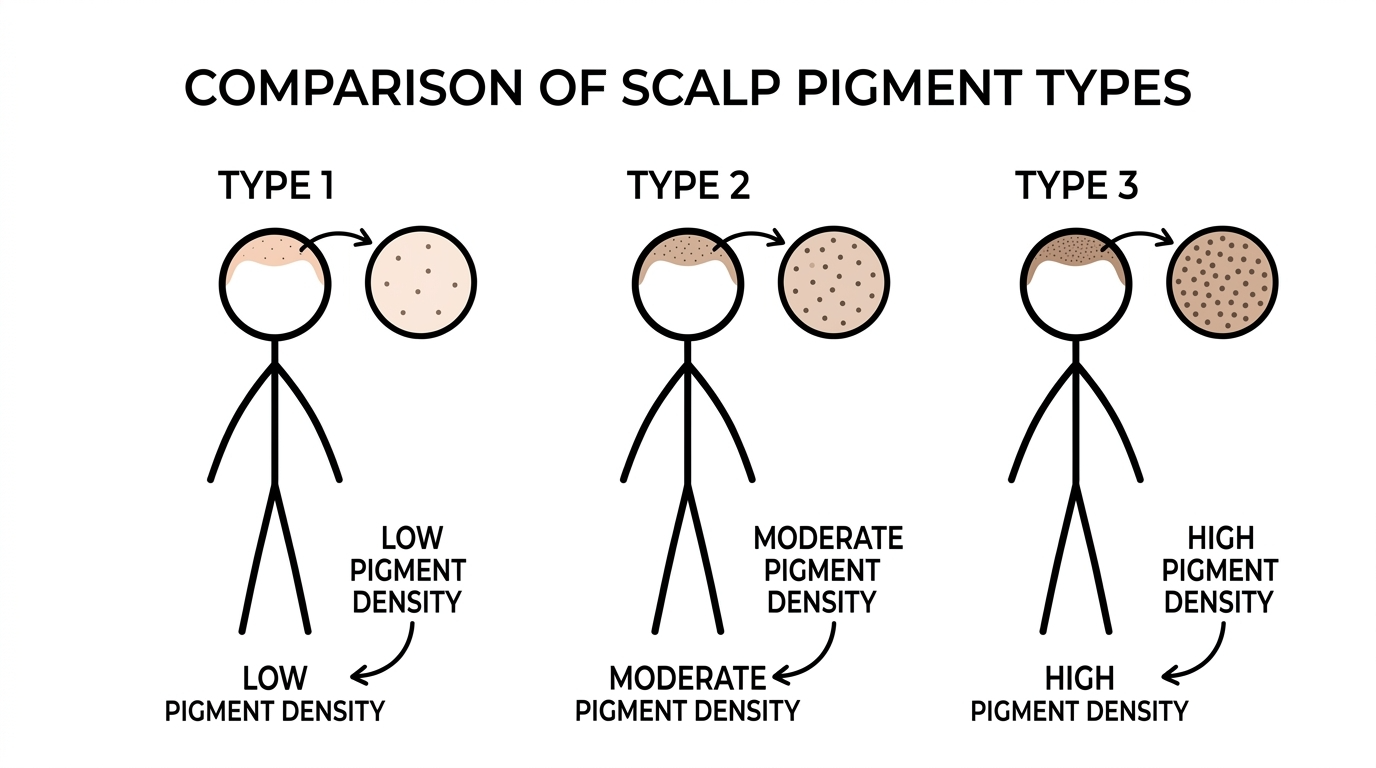
Each scalp reacts differently to pigment.
- Light skin → requires lower density to avoid harsh contrast
- Darker skin → can handle relatively higher density
- Sensitive scalp → higher risk of pigment diffusion
Additionally, scalp thickness and oil production directly affect pigment retention.
2. Desired Outcome (Natural vs Defined Look)
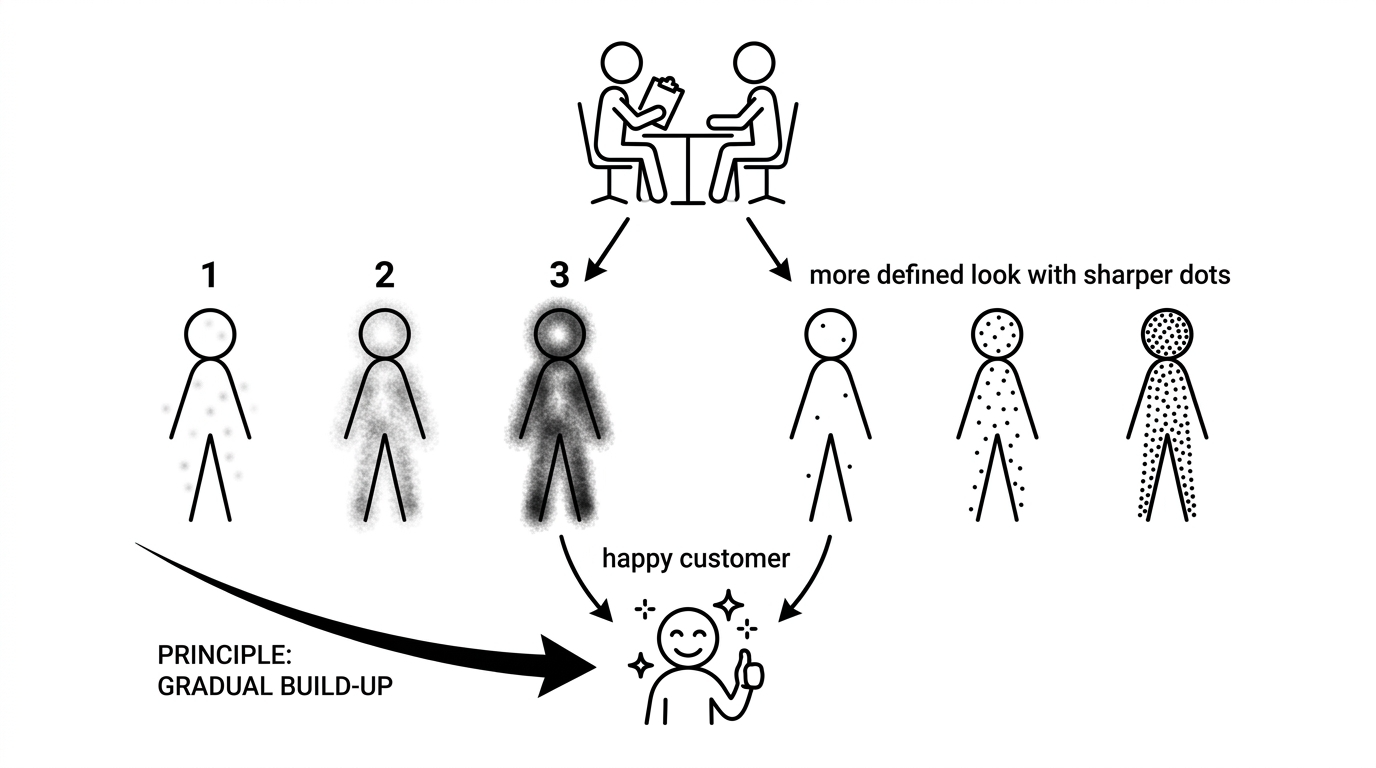
Pigment density must align with the client’s goal.
- Natural look → lower density with gradual layering
- Sharper, defined look → slightly higher density
Important principle:
👉 Avoid going too dark in the first session. Build density gradually.
3. Longevity (Result of Conditions, Not Time)
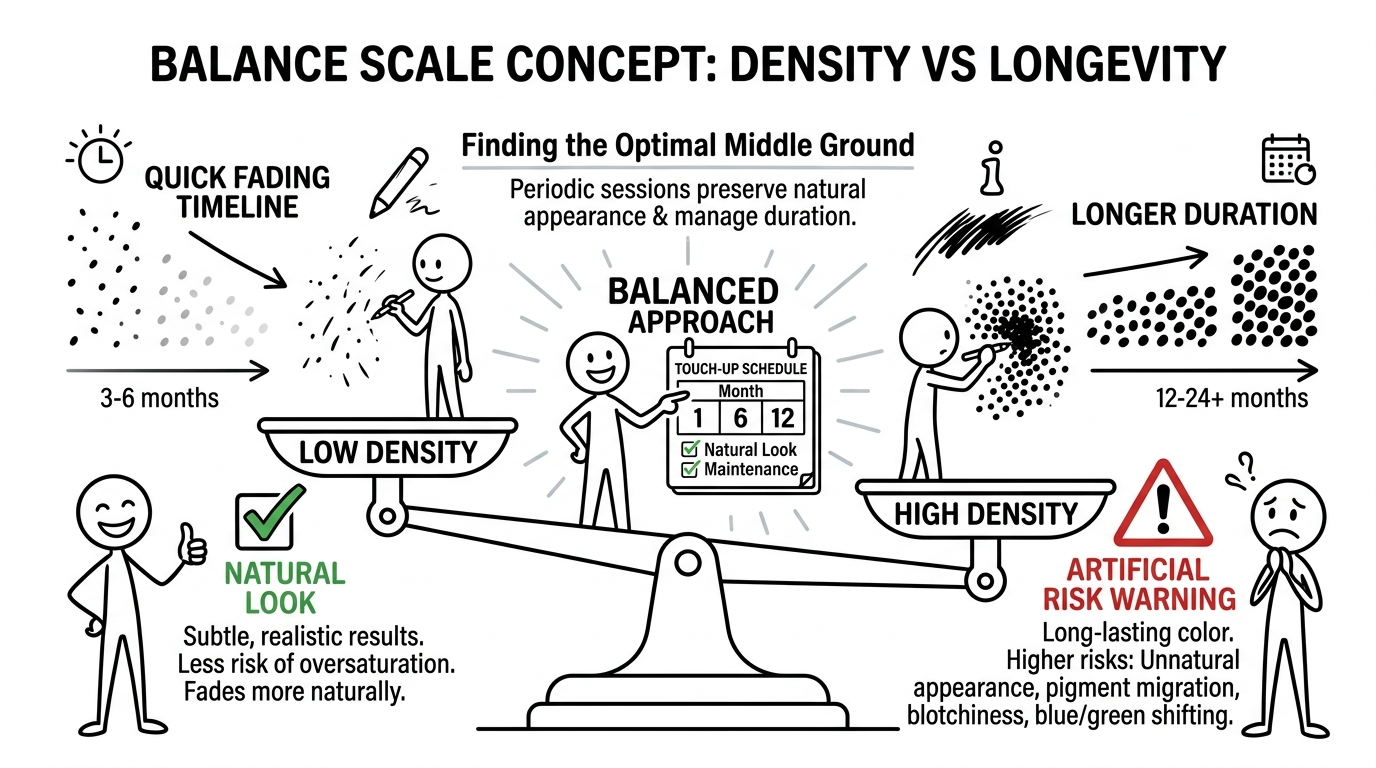
Longevity is not fixed—it depends on multiple factors:
- Pigment density
- Skin condition
- Aftercare and lifestyle
- Low density → more natural but fades faster
- High density → longer-lasting but risk of artificial look
👉 The ideal strategy is balanced density with scheduled touch-ups.
The Role of Scalp Analysis Devices

As of 2026, advanced scalp analysis devices are increasingly used in professional SMP procedures.
These devices measure:
- Moisture levels
- Sebum production
- Skin thickness
- Sensitivity
This allows practitioners to move from guesswork to data-driven decisions.
Benefits include:
- More accurate pigment density planning
- Reduced risk of over- or under-saturation
- Better prediction of longevity
What Real Experience Shows

Client satisfaction in SMP is determined more by planning than execution.
High-satisfaction cases typically include:
- Thorough consultation
- Scalp condition analysis
- Gradual multi-session approach
Low-satisfaction cases often involve:
- Rushed procedures
- Lack of explanation
- Uniform pigment application
2026 Trends in Pigment Density

The approach to SMP has evolved significantly.
Past trend:
👉 Dark, bold, highly visible results
Current trend (2026 standard):
👉 Natural density, soft layering, gradual build-up
Additionally, pigment technology has improved:
- Reduced color shift over time
- Skin-adaptive pigments
- More precise density control
Must-Check Points Before Your Procedure

Before undergoing SMP, make sure to confirm:
- Is your scalp type properly analyzed?
- Is pigment density clearly explained?
- Is the procedure planned in multiple sessions?
- Are realistic expectations about longevity provided?
👉 These four factors significantly reduce the risk of unsatisfactory results.
Final Insight
Scalp micropigmentation is not simply about applying pigment.
It is about how precisely pigment density is designed.
Natural appearance, longevity, and overall satisfaction
are all outcomes of this single factor.
👉 Ultimately, the difference lies in one thing:
“How well is the pigment density customized?”